Can You Really Change the World Starting With One Choice?
The world feels broken, but what if the solution isn’t out there—it’s within you? Every thought, every reaction, every choice shapes…


Discovering your unique awesomeness can be a challenging journey filled with self-doubt and comparison. However, embracing your individuality, sharing it with the world, and recognizing its value are essential steps to living authentically. This article explores the importance of self-acceptance and the courage to express one's true self.

Exploring the potential for a world that works for everyone, this article discusses how ordinary individuals can bring about extraordinary change. By embracing higher consciousness and collective cooperation, humanity can evolve beyond current crises and envision a future filled with peace, love, and innovation.

Every day we live inside our own virtual reality, powered by the pictures and beliefs in our minds. When we shift our inner images from fear to possibility, our outer world begins to change. The key? Becoming conscious of the story we’re projecting and choosing a new one.

The Law of Least Effort emphasizes achieving results with minimal energy by aligning actions with love, acceptance, responsibility, and defenselessness. This principle encourages a harmonious existence, turning challenges into opportunities and seamlessly manifesting desires. By embracing this law, individuals can experience life flowing effortlessly, allowing for personal evolution and fulfillment.

The path to self-awareness requires embracing responsibility for one's actions, thoughts, and relationships. By reframing challenges as lessons and understanding the role of our experiences, individuals can cultivate personal growth and foster authentic connections. This journey encourages looking inward rather than placing blame on external factors, leading to deeper spiritual understanding and healing.

The interplay between the higher and lower minds significantly impacts decision-making and creativity. While the higher mind fosters intuition and groundbreaking ideas, the lower mind often perpetuates limiting beliefs and negative emotions. Recognizing this duality can empower individuals to shift their focus and break free from old patterns, leading to more fulfilling outcomes.

Reflection and contemplation are powerful tools for unlocking solutions to complex issues. By allowing the mind to process in stillness, individuals can tap into their innate problem-solving abilities. This article explores how stepping back and embracing silence can lead to profound insights and creative breakthroughs.

When personal aspirations clash with family expectations, individuals often face difficult choices. This article explores the importance of recognizing one's Inner Compass, asserting personal rights, and employing effective communication techniques, such as the sandwich technique, to maintain personal integrity while navigating familial pressures.

The journey to performance mastery, whether in dance or surgery, relies on deep practice that fosters a profound connection with the audience. Through the story of a Yaqui Indian dancer, the article reveals how transcending mere execution transforms the act into a shared experience of beauty and emotion, illustrating the power of true mastery.

Childhood poverty and low social status are real headwinds—but not destiny. Prosperity grows from repeatable behaviors, smarter choices, and relationships that compound over time. This practical playbook turns research on mobility into daily moves you can actually make: build skills that pay, cultivate social capital, protect your mind and body, and design money systems that work on a tight budget. Start where you are, use what you have, and stack small wins until they become momentum.

When we’re stuck on a problem, we often look outward for solutions. But the real breakthrough begins within. By developing inner awareness, we can uncover the deeper roots beneath the surface issue and transform how we approach problem solving. This article shows how shifting your focus inward unlocks creative insight, clears hidden blocks, and reveals the next step forward — even when nothing else works.

We often label life events as good or bad, but perspective changes everything. What harms one person may bless another. By moving beyond rigid judgment and learning to listen to the heart, we can find inner peace and harmony. Each choice becomes an opportunity to live more fully, not through rules set in stone, but by tuning in to the wisdom of the present moment.

Decision-making is often seen as cultural, some trust intuition, others seek advice. Yet across the globe, cultural differences show one striking truth: self-reliance dominates. Whether through intuition or careful thought, most people prefer to decide alone. This article explores why decision-making patterns reveal a global bias toward independence and what cultural differences teach us about human psychology.

The global 4 day workweek experiment has shown that shorter hours can transform workplaces. Employees report less stress, higher job satisfaction, and better health, while employers benefit from improved productivity and retention. This movement challenges outdated notions of work and redefines success. Could fewer hours actually mean greater results? The evidence suggests the 4 day workweek is not just possible—it’s the future.

Failure is not the end, it’s often the beginning of something greater. By learning from failure, we open the door to resilience, wisdom, and authentic success. Every setback contains a lesson that guides us forward. When we shift our mindset, mistakes become milestones. Learning from failure is the true path to success, and it can empower you to embrace growth with confidence and clarity.

There’s a comforting myth about aging: that it’s perfectly fine to slow down, sink into the couch, and let the television take the wheel. After all, you’ve earned it, right? The trouble is, that “earned rest” might be quietly chiseling away at your brain’s sharpness faster than time itself. While TV has its charms (and plenty of reruns to prove it), it’s about as stimulating to the brain as a lukewarm bowl of oatmeal. Meanwhile, the very devices many older folks eye with suspicion, smartphones, computers, tablets, might be the real tools to keep the lights on upstairs.

We live in a society obsessed with outcomes. It's embedded in our psyches. The familiar concept repeated by CEOs and Hollywood movie characters alike has been ingrained in us: "Focus on the results. Nothing else matters.

Ever feel like you're studying hard but nothing sticks? You read the same sentence three times, highlight every paragraph, maybe even nod in agreement, only to forget it all the next day. Here's a thought: What if the key to learning isn't adding more information, but interrupting the flow? Breaking your internal monologue and challenging your memory in real time might be the most powerful upgrade to your learning ability you've never considered.

Ever wonder why some people can breeze through a podcast and remember every detail, while others need to highlight, underline, and re-read a passage three times just to make it stick? You're not alone. The way we learn—how we truly absorb and hold onto knowledge—is as personal as our favorite comfort food. There's no one-size-fits-all answer. Let's untangle this mystery together.

Most people think AI will either take their jobs or help them cheat on homework. But what if it could do something far more radical? What if it could help you think for yourself—for real? In a world addicted to shortcuts, artificial intelligence could be the first real opportunity to escape the shallow end of the intellectual pool. If, that is, you stop using it like a vending machine.

Success isn’t just about what you know—it’s about how you operate. In a world that’s automated, accelerated, and often unstable, the traits that define winners across industries aren’t technical. They’re human. This article breaks down the eight essential skills that show up in every profession, culture, and life path—and why mastering them may matter more than any degree or résumé ever could.

Is there really one best way to live, decide, or grow? This article reveals why your own truth and intuition might be the only reliable guide.
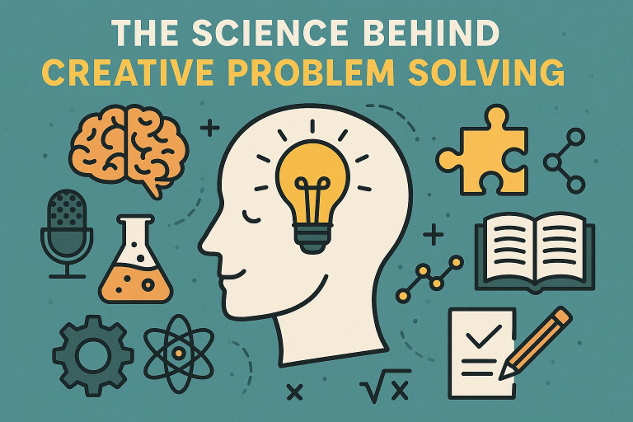
What happens in your brain at the very moment when a puzzling image suddenly makes sense? A new study reveals how moments of insight reshape our brain’s activity, strengthen memory, and point the way to more effective learning strategies. By understanding these processes, we gain tools not only for academic success but for navigating the challenges of modern life with creativity and confidence.